
Automotive Electronics now shapes how vehicles move, communicate, and protect their occupants. A modern car may combine radar sensors, power-management chips, control units, and software across dozens of systems. The supplier landscape is broad: Bosch, Continental, Denso, and Aptiv deliver major vehicle systems, while Infineon, NXP, and Renesas supply critical semiconductors. Their roles overlap, but they are not interchangeable.
Demand is shifting quickly. The International Energy Agency’s Global EV Outlook 2024 reported that electric-car sales were expected to exceed 17 million that year, approaching one in five new cars sold worldwide. That shift increases the importance of efficient power electronics, battery controls, and reliable vehicle computing. IEA Executive Director Fatih Birol described electric-car growth as “unstoppable.” His comment captures a major demand driver, though it does not, by itself, identify the strongest electronics suppliers. Rankings need context. A chipmaker and a systems integrator cannot be judged by identical measures. This overview compares leading suppliers by expertise, market position, and the technologies they support. It also considers where public evidence is clear—and where supplier comparisons remain imperfect. A polished ranking can still hide important differences.
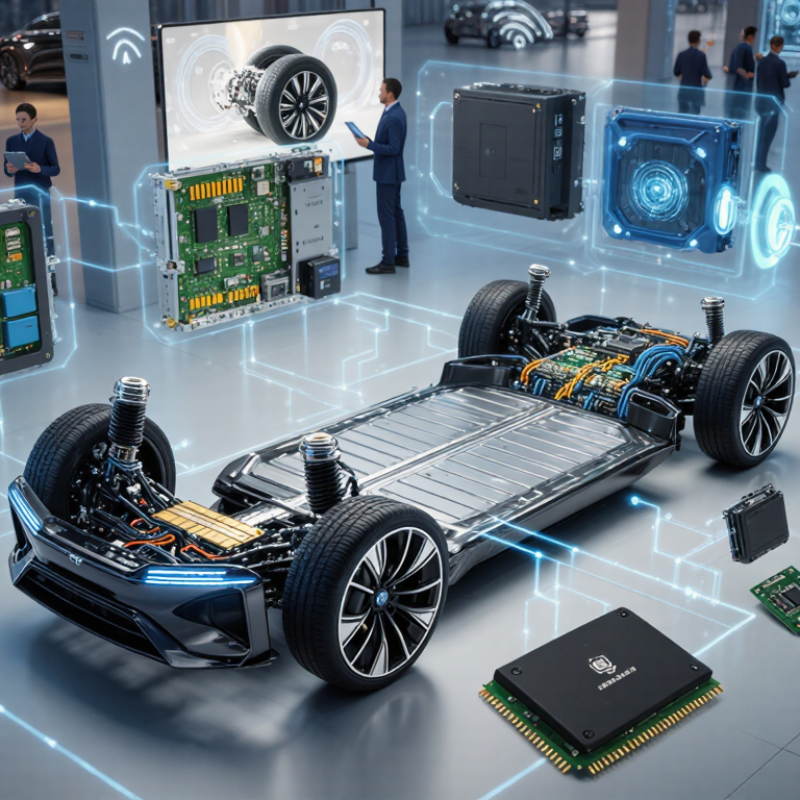
Automotive electronics suppliers cover a wide field: sensors, control units, power systems, wiring, displays, and embedded software. Some provide a finished module; others supply a single chip or specialized material. The boundary is messy. A company’s role can change across vehicle programs, so “supplier” is not one uniform category.
Tier labels describe commercial relationships, not always product quality. Tier 1 suppliers typically deliver systems or components directly to vehicle manufacturers. Tier 2 firms often sell chips, sensors, or subassemblies to those integrators, while Tier 3 businesses may provide materials or basic components. These layers overlap. A specialist can sell directly on one program and work through an integrator on another, which makes simple rankings unreliable.
Revenue comparisons need equal care. Consolidated sales may include non-automotive businesses, so automotive-specific revenue is more useful when available. Check the reporting period, currency, and whether figures represent recognized sales, backlog, or contract value; these measures are not interchangeable. Audited filings and segment notes offer a stronger basis than promotional estimates. Margins, research spending, and customer concentration can add context, but each has limits. Revenue alone can flatter scale while hiding dependence on a few programs. I would verify the scope before comparing suppliers.
A €56.2 billion sales figure signals the scale of a major mobility supplier, but it needs careful reading. The 2023 annual report attributes that amount to its Mobility business sector. It is not a figure for automotive electronics alone. The division also covers systems and services, so treating all €56.2 billion as electronics revenue would overstate what the number shows.
Scale still matters. Large sales can support engineering teams, testing facilities, and production capacity across multiple vehicle markets. Yet revenue does not reveal profit, component-level market share, or how much value comes from software. A dashboard controller and a driver-assistance computer serve different needs. Both depend on reliable electronics, but their costs and risks differ.
Demand is shifting. The International Energy Agency’s Global EV Outlook 2024 reports that nearly 14 million electric cars were sold worldwide in 2023, about 18% of new car sales. More electrified vehicles can increase demand for power electronics and control systems, though the report does not link those sales directly to supplier revenue. That distinction matters. Annual sales figures offer a useful starting point, not a complete ranking of automotive electronics suppliers.
A useful scale marker is the ¥7.14 trillion in group revenue reported for FY2024. The figure shows the supplier operates at considerable scale, but it does not reveal how much revenue came specifically from automotive electronics. Nor does revenue alone prove profitability or product quality. Revenue is not profit. The distinction matters when comparing suppliers or assessing their role in vehicle systems.
The International Energy Agency’s Global EV Outlook 2024 estimated that electric car sales reached nearly 14 million in 2023, about 18% of global car sales. Electrification increases the importance of power-control units, sensors, and thermal management. The revenue figure offers context, not a complete ranking. A careful comparison should also examine segment disclosures, investment, and customer concentration. Public reports can leave gaps; that makes precise conclusions difficult.
Tips: Check whether reported revenue is group-wide or segment-specific before comparing companies. Look for consistent fiscal-year periods, too. One small mismatch can distort the picture.
| Metric | Reported figure | Period and scope |
|---|---|---|
| Consolidated revenue | ¥7.14 trillion | Fiscal year ended March 2024; group-wide |
| Revenue in billions of yen | ¥7,144.7 billion | Fiscal year ended March 2024; consolidated |
| Operating profit | ¥380.6 billion | Fiscal year ended March 2024; consolidated |
| Operating margin | Approximately 5.3% | Calculated as operating profit divided by revenue |
| Profit attributable to owners | ¥312.7 billion | Fiscal year ended March 2024; consolidated |
| Reporting currency | Japanese yen (¥) | As reported; no currency conversion applied |
| Figures are presented for an anonymized automotive supplier. The operating margin is calculated from the reported revenue and operating profit; rounded figures may affect the result. | ||
Two major automotive suppliers reported substantial 2023 sales: one recorded €20.3 billion, while another reported $20.1 billion. Those figures show the scale of the electronics business inside modern vehicles. Yet they are not directly comparable. The currencies differ, and company reporting may define automotive sales differently. A straight ranking would hide those details.
The numbers matter because electronics now sit throughout a vehicle: behind the dashboard, near the wheels, and inside power and safety systems. A single car may rely on sensors, controllers, and software working together in milliseconds. Supplying those parts at global scale requires engineering depth and dependable production. That comparison is useful, but not perfect. Sales alone cannot show profit, product quality, or how much revenue came from electronics specifically. Buyers should check each supplier’s reporting notes before drawing firm conclusions. Even a headline figure needs context. The scale is clear; the precise comparison is less so.
The figures are reported in each supplier’s original currency. Because euros and US dollars are not converted to a common currency, the bar heights should not be interpreted as a direct comparison of sales.
Automotive electronics suppliers are best compared by capability, not by one overall ranking. In ADAS, examine sensor quality, processing speed, system redundancy, and performance in rain or glare. A clean demonstration proves little. Ask for repeatable test results and evidence of reliable software updates; public data is often difficult to compare.
Power-electronics suppliers matter as electric vehicles scale. The International Energy Agency’s Global EV Outlook 2024 reports nearly 14 million electric cars sold in 2023, about 18% of global car sales. That raises demand for efficient inverters, converters, and thermal management. McKinsey’s 2021 analysis projected automotive software and electronics revenue could reach $462 billion by 2030, up from $238 billion in 2020. Software and connectivity suppliers should be judged on update reliability, data integration, and connection stability in tunnels or weak-coverage areas. Fast is not always better. A supplier can lead in computing yet lag in real-world validation; buyers should weigh measurable performance, service support, and transparent failure reporting.
It is 2023 sales for a mobility business sector, not electronics revenue alone. The sector also includes systems and services. Easy to overlook.
It represents group-wide revenue. It does not show how much came specifically from automotive electronics, or whether the business was profitable.
No. Revenue measures sales, not profit. It also cannot confirm product quality or market share. Not quite.
Nearly 14 million electric cars were sold, accounting for about 18% of new car sales worldwide.
Not from these figures alone. Electrification may increase demand for power electronics and control systems, but the reports do not link those sales directly.
Power-control units, sensors, and thermal-management systems are relevant examples. Their roles and costs can differ considerably.
Large sales can support engineering teams, testing facilities, and production capacity. Still, scale alone says little about performance.
Check whether each figure covers a whole group or one business sector. Compare fiscal periods, segment disclosures, and customer concentration too. A neat comparison still feels incomplete.
Automotive Electronics suppliers serve a broad market, from sensors and control units to power systems, driver-assistance technology, software, and vehicle connectivity. Comparing companies requires care: some report revenue across an entire group, while others disclose automotive-specific sales, and fiscal years may differ. These figures therefore indicate business scale, not a direct ranking of automotive electronics capability.
The figures in the outline illustrate that range: one supplier reported €56.2 billion in 2023 sales, another recorded ¥7.14 trillion in group revenue for fiscal 2024, and two others reported automotive sales of €20.3 billion and $20.1 billion in 2023. Beyond revenue, suppliers differ in their strengths across ADAS, power electronics, software, and connectivity. A useful comparison considers both financial scale and the technologies each company can support across increasingly digital and electrified vehicles.