
Fuel Injectors control how fuel reaches an engine, but the term covers several designs and delivery methods. Some systems spray fuel into the intake path; others inject it directly into the combustion chamber. Diesel systems add another distinction, with common-rail injectors operating under very high pressure. The hardware may look similar at a glance. Its location, pressure, and control strategy change how it works.
The U.S. EPA’s 2023 Automotive Trends Report estimated average real-world fuel economy for new light-duty vehicles at 26.0 miles per gallon for model year 2022. That fleet-wide figure offers useful context, but it does not show that injector design alone determines efficiency. Engine size, vehicle weight, calibration, and driving conditions matter too. This is an important limit to keep in mind.
This guide compares throttle-body, port fuel injection, gasoline direct injection, and diesel common-rail systems. It draws on engineering descriptions in the Bosch Automotive Handbook and technical literature published by SAE International, alongside EPA fleet data. For each type, we’ll look at where fuel enters, how the injector is controlled, and where the design is commonly used. We’ll also note practical trade-offs, including deposits, maintenance needs, and operating pressure. A neat category label does not tell the whole story. Real systems can overlap, and older vehicles may use different arrangements than newer ones. Understanding those details makes injector comparisons more useful—and less likely to promise more than the evidence supports.
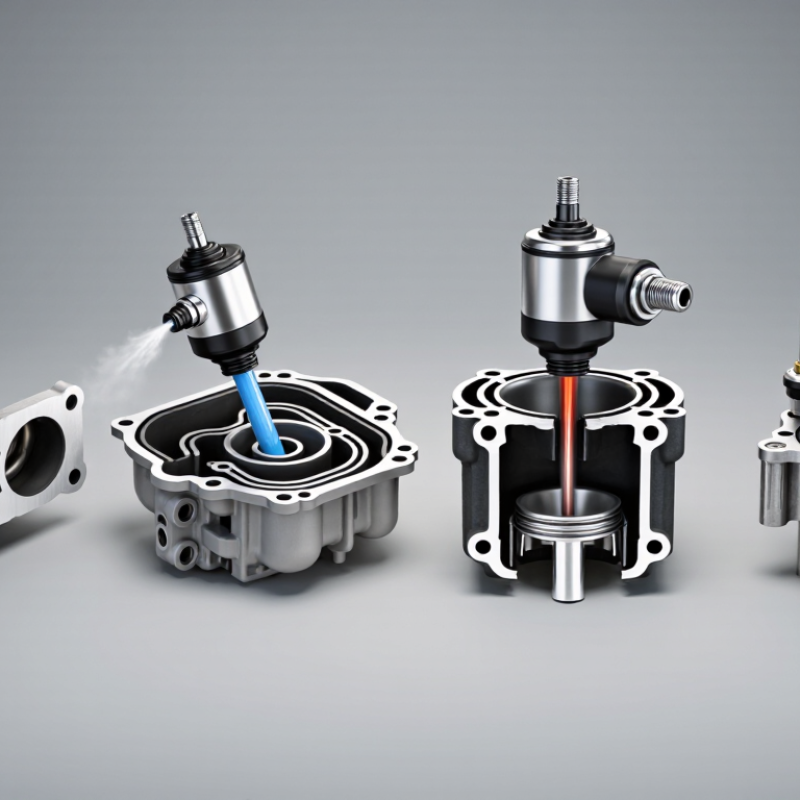
Fuel injectors are often classified by where they deliver fuel. In throttle-body injection, one or two injectors sit near the throttle plate and spray into a shared intake passage. It resembles a carburetor’s location, but electronic controls meter the fuel. Port fuel injection places an injector beside each intake port, usually aimed toward the intake valve. Fuel mixes with air before entering the cylinder.
Direct injection sends fuel straight into the combustion chamber through an injector mounted in the cylinder head. This arrangement allows precise control over when fuel enters, but its injectors and fuel system work at much higher pressures. Some engines use both port and direct injection to meet different operating needs. That distinction sounds simple, yet real layouts can be less obvious when components are covered.
Tips: Check the engine’s service information before identifying its injector type. Look at injector placement and fuel-line routing, not appearance alone. A layout can be hard to see. When uncertain, ask a qualified technician; a photo may not show enough detail.
What Are the Different Types of Fuel Injectors?
Throttle-Body and Port Fuel Injectors
Throttle-body injection (TBI) places one or two injectors above the throttle plate. Fuel enters the intake air before reaching the cylinders, much like a carburetor’s location, but the injectors meter it electronically. Port fuel injection (PFI) uses a separate injector near each cylinder’s intake valve. That shorter route helps deliver fuel more precisely. In typical designs, TBI fuel pressure is roughly 7–15 psi, while PFI often operates around 30–60 psi; exact specifications vary by engine. More pressure alone does not guarantee better performance.
The difference matters in service work. TBI systems have fewer injectors, but fuel distribution can vary between cylinders. PFI offers more cylinder-specific control and can improve mixture consistency. Still, deposits, worn seals, or incorrect pressure can undermine either system. The U.S. EPA’s 2024 Automotive Trends Report puts the 2023 model-year fleet average at 27.1 mpg, a useful reminder of the efficiency demands modern engine controls must meet—not proof that one injector layout caused that result. That distinction is easy to overlook.
Tips: Check the service manual’s pressure specification before diagnosing a fault. Compare readings at the test port, and inspect the spray pattern where safe. A clean-looking injector can still deliver unevenly. I’d avoid replacing parts based on pressure alone.
Gasoline direct injectors spray fuel straight into the combustion chamber, where timing and spray shape affect mixing. Different jobs. Many modern systems operate at roughly 200–350 bar, according to pressure ranges reported in SAE International technical literature. A fine cone of fuel can help combustion, but deposits on injector tips may distort that pattern over time. The European Commission’s Euro 6 framework set a particle-number limit of 6 × 10¹¹ particles per kilometre for direct-injection gasoline vehicles during its applicable phase-in. That figure reflects vehicle emissions, not injector performance alone.
Diesel injectors also spray directly into the cylinder, but work with compression ignition and much higher pressures. SAE technical literature describes common-rail systems operating around 2,000–2,500 bar, depending on design. At those pressures, tiny fuel pulses must arrive precisely as the piston compresses hot air. The result is efficient combustion, though a worn nozzle can create uneven spray and rough running. Pressure figures vary across engines; they are not a universal specification.
The distinction is useful, but not perfectly clean. Both injector types depend on calibrated timing, clean fuel, and careful diagnosis.
Fuel injection methods differ in when and how fuel reaches the cylinders.
Continuous injection
Continuous injection supplies fuel steadily while the engine runs. Airflow and system pressure help determine the amount delivered. This method appeared in older mechanical designs and is less common in modern passenger vehicles. Since fuel is not released as a timed electrical pulse, its operation differs from electronically pulsed systems.
Batch injection
Batch injection uses electronic injectors but fires several at once, often in paired groups. Fuel can wait near an intake valve until that cylinder draws air.
Sequential injection
Sequential injection fires each injector separately, timed to its cylinder’s intake cycle. This can improve fuel-delivery control during starts and changing loads. Results still depend on engine design, sensors, and calibration. More precise timing does not automatically create a noticeable power increase. A slightly uneven idle may also come from ignition problems or air leaks, not injection strategy alone.
Tips: Identify the system layout before testing. Check connectors and use service data for fuel-pressure and injector-pulse specifications. Don’t infer injector type from appearance alone; wiring and control signals offer better clues. Older systems may combine features, so labels can be imperfect.
Fuel injectors differ by where they deliver fuel, how they meter it, and the engine conditions they must withstand. Port fuel injectors spray into the intake ports, where fuel mixes with incoming air before reaching the cylinders. Their relatively simple layout suits many everyday gasoline engines. Direct-injection units spray straight into the combustion chamber, allowing more precise timing and charge cooling, but they face greater heat and pressure. Typical gasoline direct-injection pressures can exceed 200 bar; exact limits depend on the system. Diesel common-rail injectors work at much higher pressures, often above 1,000 bar, to atomize fuel in compressed air. Small nozzles. Very different demands.
Application explains why no single design is best. Port injection can help keep intake valves cleaner, while direct injection supports efficient combustion under varied loads. The U.S. Environmental Protection Agency’s 2023 Automotive Trends Report indicates that direct injection appeared in roughly six out of ten new U.S. vehicles in model year 2022. That adoption figure shows its practical appeal, not universal superiority. Throttle-body injection, an older central approach, feeds several cylinders through one injector location and is simpler, but offers less precise cylinder-level control. In service, spray pattern, electrical response, fuel pressure, and deposits all matter; a replacement that physically fits may still deliver poorly. These distinctions are easy to flatten in a parts list, and that is where even experienced owners can miss the real operating trade-off.
Injector designs differ in where and how they deliver fuel. The chart compares approximate fuel-pressure ranges used by common injection systems.
Pressure ranges are indicative and vary by engine and system. The horizontal axis is logarithmic to show both low- and high-pressure systems clearly.
One or two injectors spray fuel near the throttle plate into a shared intake passage. Its location resembles a carburetor, but electronic controls meter the fuel.
Each intake port usually has an injector aimed toward its intake valve. Fuel mixes with air before entering the cylinder.
Its injector sends fuel straight into the combustion chamber. The system operates at much higher pressures and controls fuel-entry timing precisely.
Yes. Some engines use both methods for different operating needs. The layout may be hard to see when components are covered.
Batch injection fires several injectors together, often in pairs. Sequential injection fires each injector separately, timed to its cylinder’s intake cycle.
It is less common today and appeared in older mechanical designs. Fuel flows steadily while the engine runs, rather than in timed electrical pulses.
No. More precise timing does not automatically create a noticeable power increase. Not always.
Check service information, injector placement, fuel-line routing, wiring, and control signals. Appearance alone can be misleading. If the layout remains unclear, ask a qualified technician; a photo may not show enough detail.
Fuel Injectors deliver fuel to an engine in several ways, and their design depends largely on where and how the fuel enters the engine. Throttle-body injectors spray fuel near the throttle, while port injectors send it into individual intake ports. Gasoline direct injectors deliver fuel straight into the combustion chambers, and diesel injectors are designed to handle the distinct fuel-delivery demands of diesel engines.
Fuel delivery can also be continuous, batch-based, or sequential. Continuous systems supply fuel steadily, whereas batch systems activate groups of injectors together and sequential systems time each injector to a specific cylinder. These differences affect how precisely fuel is delivered and how each system suits a particular engine. Understanding injector location, operation, and application makes it easier to see why engines use different Fuel Injectors to meet their performance and operating needs.