
Auto Parts & Maintenance Blog
Your trusted resource for vehicle maintenance tips, OEM part advice, and automotive insights from Elmhurst Auto Parts.
Why Do Suspension Struts Fail and Need Replacement?
When a vehicle dives under braking, bounces after a speed bump, or wears its tires unevenly, many drivers blame the tires first. The real problem may be worn Suspension Struts. These components support vehicle weight, control spring movement, and help maintain tire contact with the road. Their condition affects steering response, braking stability, and everyday comfort.
Craig Van Batenburg, an ASE Master Automobile Technician and automotive training specialist, warns, “A worn strut can hide in plain sight until braking, handling, and tire wear reveal the damage.” That warning matters because strut failure rarely happens in one dramatic moment. Seals may leak slowly. Internal valves can weaken. A bent strut may follow a pothole impact. Small changes become noticeable over time.
Look for oil around the strut body, excessive bouncing, clunking noises, or a vehicle that leans through corners. A steering wheel that no longer returns smoothly also deserves attention. However, symptoms can overlap with worn control-arm bushings, springs, ball joints, or poor alignment. Guessing can lead to an unnecessary replacement.
A proper inspection should compare both sides of the axle. It should include a road test, tire examination, mounting-hardware check, and alignment assessment. Replacement decisions depend on mileage, damage, leakage, handling complaints, and manufacturer guidance. Sometimes the strut is not the only failed part.
The honest answer is less convenient. Suspension Struts do not follow one universal replacement schedule. Neglecting them can reduce control, yet replacing them without diagnosis wastes money. This guide explains why they fail, how technicians confirm the cause, and when replacement becomes the safer choice.
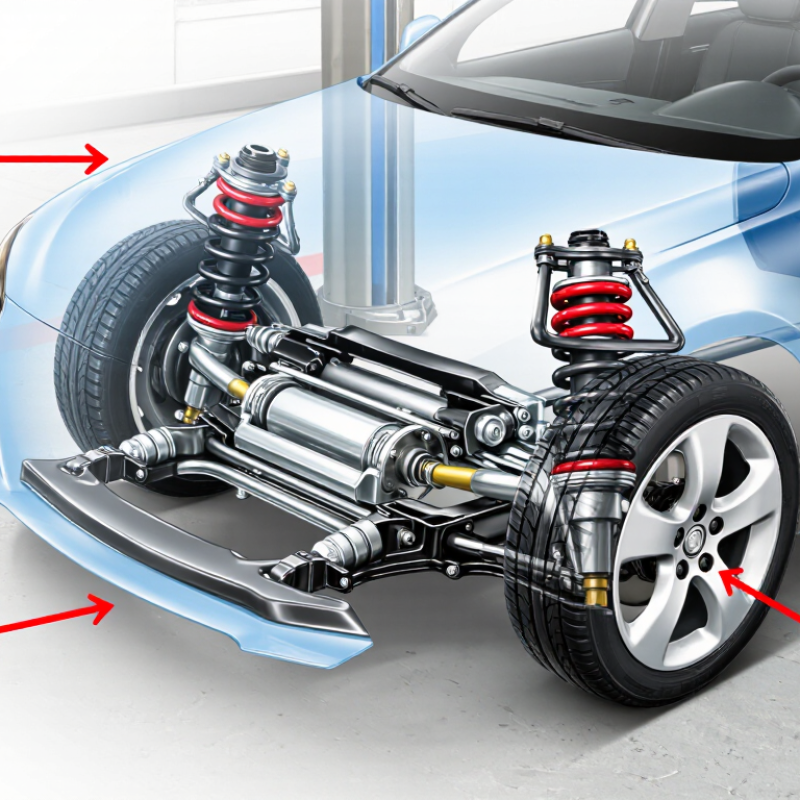
What Suspension Struts Do and Why They Matter
Why Do Suspension Struts Fail and Need Replacement?
What Suspension Struts Do and Why They Matter
Suspension struts connect the vehicle body to its wheels and help control vertical movement. They support the vehicle’s weight while allowing the wheels to follow uneven roads. Inside each strut, damping components resist spring movement. That control keeps the tires in contact with the pavement. Without it, the vehicle can bounce after a pothole.
Struts also help maintain steering accuracy and braking stability. During braking, worn struts may allow excessive front-end dipping. A leaking strut can leave oily residue around its housing. You may also notice repeated bouncing, nose diving, or a loose feeling through the steering wheel. Uneven tire wear can appear as scalloped patches. These signs deserve inspection, not guesswork.
Struts commonly fail because of worn seals, corrosion, hard impacts, or long-term use. Heavy loads and rough roads can accelerate that wear. I once dismissed a mild clunk as ordinary road noise. That was a mistake. A qualified technician checks leakage, mounting hardware, spring condition, and wheel alignment. Replacement becomes more urgent when damping is weak or structural parts are damaged. Road texture matters. So does driving style. After installation, proper alignment helps prevent irregular tire wear and restores predictable handling.
How Suspension Struts Wear Out Over Time
Suspension struts rarely fail overnight. They wear through heat, vibration, road salt, and repeated impacts. Inside the strut, hydraulic fluid moves through small valves. Over time, seals harden and fluid may escape. The piston rod can also corrode, especially where winter salt reaches the wheel arch.
Mileage alone can mislead. S&P Global Mobility reported that the average U.S. vehicle age reached 12.6 years in 2024. Older vehicles simply face more cycles of braking, cornering, and pothole impacts. AAA’s 2024 Your Driving Costs study placed maintenance, repair, and tire expenses at 10.13 cents per mile. Struts are only one part of that cost, but their condition affects tire wear and steering control.
Look closely at the details. A wet film around the strut body suggests leakage. Cupped tire tread, longer braking dive, or repeated bouncing also deserve attention. The two-second bounce test helps, but it is not proof. A strut can feel acceptable in a driveway and still perform poorly on a test machine. That is easy to overlook. In professional inspections, technicians check mounting hardware, spring condition, bushings, and alignment angles together. Replacing one worn strut may leave uneven damping across the axle. Pair replacement is often more consistent, though the vehicle’s service history should guide the decision.
Common Driving Conditions That Cause Strut Failure
Why Do Suspension Struts Fail and Need Replacement?
Suspension struts rarely fail from one dramatic event. More often, daily driving slowly overwhelms them. Potholes, broken pavement, and speed bumps force the piston to move violently. Repeated impacts can damage internal seals and reduce damping oil. On rough roads, a loaded vehicle experiences even greater stress. I have seen this appear as uneven tire wear, nose-diving under braking, or repeated bouncing after one corner is pushed down. One bounce is not a verdict. Temperature, tire pressure, and worn springs can mislead the inspection.
Winter conditions create another problem. Road salt and moisture attack exposed metal, especially around the strut body and mounting hardware. A rusty surface does not always mean immediate failure, but flaking corrosion deserves attention. Deep puddles can also affect damaged seals, while freezing weather makes rubber mounts less flexible. Drivers who frequently use gravel roads should expect more dust around the upper mount. It may be harmless. It may also hide a developing issue.
Aggressive cornering, frequent towing, and heavy cargo keep struts working near their limits. Poor wheel alignment adds uneven loads and may shorten tire life before the strut feels weak. During a professional check, technicians should compare both sides, inspect leakage, mounting play, spring condition, and ride height. Replacing one side can be appropriate in limited cases, but paired replacement often preserves balanced handling. I would not rely on a visual check alone; a dry strut can still perform poorly.
Signs That Suspension Struts Need Replacement
Suspension struts usually fail gradually, so drivers often notice handling changes before mechanical damage becomes obvious. A leaking strut may leave an oily film around its body. The car may also bounce twice after a speed bump, dip forward during braking, or feel loose through a sweeping corner. These signs deserve attention.
Uneven tire cupping is another warning. Run your palm across the tread. A repeating, scalloped texture can indicate poor damping, although incorrect tire pressure can create similar wear. Clunking over broken pavement may point to a worn mount, spring, or connecting component instead of the strut itself. A bounce test helps, but it is not a verdict. Experienced technicians inspect the assembly, tire pattern, ride height, and steering response together.
The TÜV Report 2024 recorded significant defects in about 5.7% of two-to-three-year-old vehicles, rising to roughly 10% at four-to-five years. Its findings support regular inspection as vehicles age, though the figures cover all major systems, not struts alone. A separate AAA report estimated that pothole damage costs U.S. drivers about $3 billion annually. Repeated impacts can accelerate wear. I have seen apparently clean struts perform poorly on a road test. That is the imperfect part: visual checks can miss weakened damping. Replace struts in axle pairs when testing confirms failure, then check alignment and tire condition.
Why Do Suspension Struts Fail and Need Replacement?
Signs that suspension struts may be worn include excessive bouncing, fluid leakage, uneven tire wear, nose-diving during braking, and unstable handling.
The chart shows practical screening indicators commonly used during suspension inspections. A vehicle that continues oscillating more than twice after a firm push, or has visible strut-fluid leakage, should be professionally inspected. Exact replacement criteria vary by vehicle design and service specifications.
How Strut Replacement Restores Vehicle Safety and Control
Suspension struts do more than soften bumps. They help keep tires planted, control body movement, and support accurate steering. When struts weaken, the vehicle may nose-dive during braking, sway through corners, or continue bouncing after a speed bump. You might also notice uneven tire wear, clunking sounds, or a steering wheel that feels less settled. A worn strut can still feel acceptable during a short drive. That is where judgment can fail. A visual inspection alone may miss internal damping loss, so professional testing matters.
Tips: Watch the car after a bump. One extra bounce deserves attention. Check for oil around the strut body, but remember that not every noise means strut failure. Ask a qualified technician to inspect mounts, springs, bump stops, and related hardware. These parts often wear together, although replacing everything automatically is not always necessary.
Proper strut replacement restores controlled suspension movement and more predictable handling. The technician should use the correct installation procedure, tighten fasteners accurately, and inspect both sides of the axle. Replacing struts in pairs usually helps maintain balanced control. A wheel alignment may also be needed, especially when steering or suspension components were disturbed. Afterward, the vehicle should track straight, brake with less dive, and feel calmer over uneven pavement. The improvement is not merely comfort. It can help the driver maintain control when roads become wet, rough, or unexpectedly crowded.
FAQS
Suspension struts connect the vehicle body with its wheels. They support weight and control vertical movement. They keep tires touching the pavement over potholes and uneven roads. Without damping, the vehicle may keep bouncing.
Common signs include repeated bouncing, nose-diving, clunking, and loose steering. You may also see oily residue around the strut housing. Uneven tires can develop scalloped patches. Check it soon.
It may feel acceptable during a short drive. That impression can be misleading. Weak struts can reduce braking stability, steering accuracy, and cornering control. Professional testing is safer than relying only on road feel.
Potholes force the internal piston to move violently. Repeated impacts can damage seals and reduce damping performance. Gravel roads add dust around upper mounts. Heavy cargo increases stress further.
Road salt and moisture can attack exposed metal and mounting hardware. Flaking corrosion deserves inspection. Freezing temperatures may also make rubber mounts less flexible. A rusty surface does not always mean immediate failure.
Oil around the strut body may indicate a leaking seal. However, a visual check cannot confirm every failure. A dry strut can still perform poorly. A technician should test damping and inspect related parts.
Paired replacement often provides more balanced handling across one axle. Single-side replacement may suit limited situations. The decision depends on condition, mileage, and the technician’s inspection. Replacing everything automatically is not always necessary.
Alignment may be needed when steering or suspension parts are disturbed. Correct alignment helps prevent irregular tire wear. After installation, the vehicle should track straight and brake with less front-end dive. Small details matter.
Conclusion
Suspension Struts play a vital role in supporting a vehicle’s weight, controlling spring movement, and keeping the tires firmly connected to the road. Over time, constant impacts, friction, heavy loads, rough roads, potholes, and harsh weather can weaken or damage their internal components. As the struts lose their ability to absorb movement, the vehicle may become less stable and more difficult to control.
Common warning signs include excessive bouncing, uneven tire wear, nose-diving during braking, body rolling through turns, unusual knocking sounds, fluid leakage, and a generally rough or unstable ride. Ignoring these symptoms can reduce braking effectiveness and steering precision. Replacing worn Suspension Struts restores proper damping, improves vehicle balance, supports more even tire contact, and helps drivers maintain better control and comfort. Regular inspections are especially important when handling problems appear or when the vehicle is frequently driven under demanding conditions.

Blog Tags: