
Auto Parts & Maintenance Blog
Your trusted resource for vehicle maintenance tips, OEM part advice, and automotive insights from Elmhurst Auto Parts.
Choosing the right Engine Oil Filters in 2026 is more than matching a thread size. Modern engines use tighter tolerances, turbochargers, hybrid systems, and longer service intervals. A filter that looks identical may have different media, valve settings, or sealing quality. This guide examines how to compare those details before purchase. It uses manufacturer specifications, workshop experience, and practical inspection points rather than marketing claims. Check the part number carefully. Verify thread size, gasket diameter, bypass pressure, and oil compatibility. Small errors can cause leaks or restricted flow. They can also complicate warranty discussions.
Real driving conditions matter. Frequent cold starts, dusty roads, towing, and short urban trips can load filter media faster than highway use. A high-efficiency filter may protect sensitive components, but excessive restriction is not helpful. Micron ratings alone do not tell the whole story. Look for documented testing, burst strength, anti-drainback valve performance, and a traceable manufacturer. Independent laboratory data is useful, although it is not always available. That limitation deserves honesty. No single Engine Oil Filters product suits every engine. Compare the vehicle handbook, oil specification, climate, and service schedule. During installation, lubricate the gasket, tighten it correctly, and inspect for seepage after startup. Even experienced technicians occasionally overlook a reused sealing ring. This guide aims to reduce that risk, while acknowledging that product quality and published data can change during 2026.
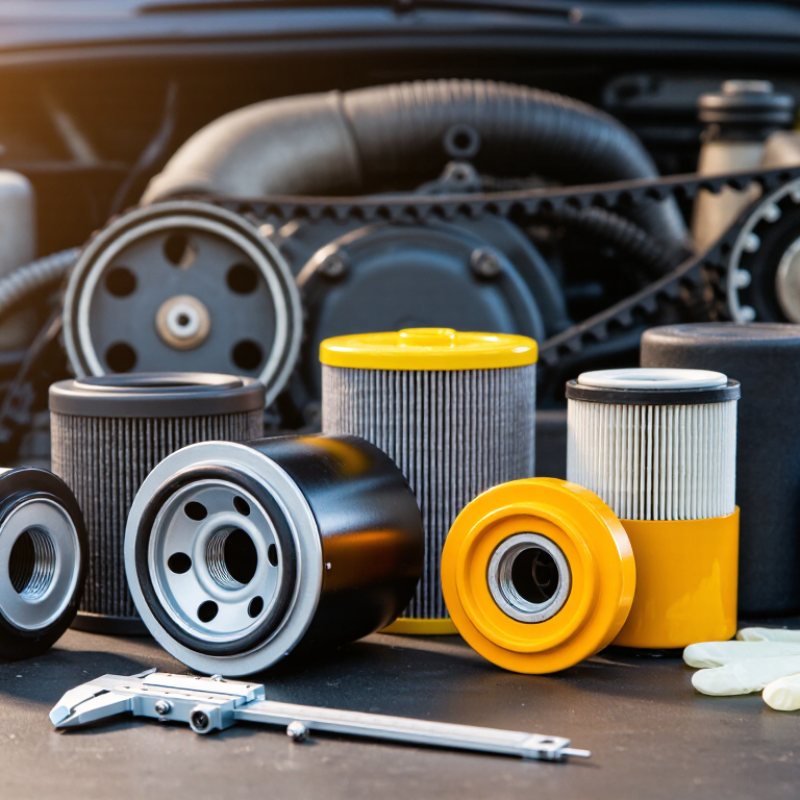
Define Oil Filter Roles Using API SQ and ILSAC GF-7 Standards
How to Choose Engine Oil Filters in 2026?
API SQ and ILSAC GF-7 define oil performance, not filter certification. They target modern gasoline engines, including stronger low-speed pre-ignition and timing-chain wear protection. The filter must preserve that oil under heat, pressure, and contamination. SAE J300 data lists 0W-20 viscosity at 6.9–9.2 mm²/s at 100°C, showing why flow control matters. A restrictive filter can delay lubrication during cold starts. That detail is easy to overlook.
Tips: Match the vehicle manual first. Check the filter’s bypass-valve setting, anti-drainback design, gasket quality, and dirt-holding capacity. Do not select only by thread size. A 2025 technical review from the Society of Automotive Engineers links cleaner oil with reduced abrasive wear, but filter life still depends on dust, fuel dilution, and driving conditions. Short trips are harder on oil systems.
Use a filter designed for the engine’s specified oil grade and service interval. API’s Engine Oil Licensing and Certification System identifies oils meeting SQ requirements, but it does not automatically approve every filter. Independent testing should examine particle removal, pressure loss, burst strength, and fatigue performance. ISO 4548 test methods provide useful laboratory benchmarks for full-flow filters. Real workshops remain important. A clean cut-open filter can reveal loading, seal damage, or unusual metal debris. The inspection is imperfect, but it often exposes problems that specifications miss.
How to Choose Engine Oil Filters in 2026? — Define Oil Filter Roles Using API SQ and ILSAC GF-7 Standards
| Selection Dimension | What the Filter Does | Relevant API SQ / ILSAC GF-7 Context | Practical Selection Guidance for 2026 |
|---|---|---|---|
| Oil-quality compatibility | Keeps abrasive and contaminating particles out of the lubrication circuit while allowing the oil to circulate. | API SQ and ILSAC GF-7 are engine-oil performance classifications. They do not, by themselves, specify one universal oil-filter design or replacement interval. | Use a filter explicitly listed for the vehicle’s engine and oil system. Do not assume that an oil meeting GF-7 requires a special filter category. |
| Particle-removal efficiency | Captures wear debris, dust, soot-related contaminants, and manufacturing residue before they reach bearings and other precision components. | GF-7 and API SQ focus on engine-oil performance, including protection against deposits, wear, sludge, oxidation, and low-speed pre-ignition where applicable; filter efficiency is a separate filter-performance property. | Compare published efficiency test results using the same test method and particle size. A single “micron rating” is not sufficient for a fair comparison. |
| Dirt-holding capacity | Allows the filter to retain contaminants over the service interval without excessive restriction. | API SQ and GF-7 do not establish a universal dirt-capacity value for every replacement filter. | For dusty environments, extended service intervals, or high-mileage operation, prioritize verified capacity data and follow the vehicle manufacturer’s replacement interval. |
| Pressure-relief / bypass valve | Maintains oil flow when oil is very cold or when the filter element becomes highly restricted. | The correct opening pressure is determined by the engine lubrication-system design, not simply by the API SQ or GF-7 designation. | Match the specified bypass-valve setting and filter configuration. An incorrect setting can increase unfiltered flow or delay lubrication. |
| Anti-drainback valve | Helps prevent oil from draining out of the filter when the engine is stopped, supporting faster oil delivery during starting. | Neither API SQ nor GF-7 replaces the vehicle-specific requirement for filter orientation, valve design, or valve material. | Use the valve type specified for the application. Silicone and nitrile materials have different temperature and aging characteristics, so compatibility matters. |
| Flow capacity and pressure drop | Provides adequate oil flow while limiting resistance across the filter element. | GF-7 includes modern engine-oil performance requirements, but the filter must still be matched to the engine’s flow demand and oil viscosity. | Check pressure-drop data at a comparable flow rate and temperature. Avoid selecting solely by external dimensions or thread size. |
| Cold-start performance | Controls restriction during cold starts, when engine oil is more viscous and flow demand changes rapidly. | GF-7A covers the primary ILSAC GF-7 category; GF-7B is for SAE 0W-16 oils. The oil grade and filter’s valve behavior should both suit the application. | Follow the owner’s manual for SAE viscosity. For 0W-16 applications, verify that the filter is approved for the engine and its specified cold-start conditions. |
| Sealing and structural strength | Prevents external leaks and protects the element from collapse, deformation, and fatigue under operating pressure. | API SQ and GF-7 are not substitutes for correct gasket dimensions, thread specifications, housing fit, or pressure durability. | Verify thread, gasket outside and inside diameters, gasket location, housing clearance, and the application’s pressure requirements. |
| Service interval suitability | Retains contaminants and maintains acceptable flow until the scheduled filter replacement. | API SQ and GF-7 define oil performance, not a universal oil or filter drain interval. Actual intervals depend on the vehicle, operating conditions, and oil-life system. | Replace the filter when specified by the vehicle manufacturer. Severe use, frequent short trips, towing, dust, and extreme temperatures may require shorter service intervals. |
| Certification and documentation | Provides evidence that the filter’s stated performance and fit can be evaluated consistently. | API SQ and ILSAC GF-7 marks apply to qualifying engine oils, not automatically to oil filters. Filter test data should be reviewed separately. | Select a filter with traceable specifications, application data, and test-method details. Treat unsupported efficiency or service-life claims cautiously. |
FAQS
A micron number shows a particle size, but not the filter’s actual capture efficiency. Testing conditions matter. Oil temperature, viscosity, flow rate, and test duration can change results.
The beta ratio compares particle counts before and after filtration. A β10(c) = 200 rating removes 99.5% of tested 10-micron particles. A β10(c) = 1,000 rating removes 99.9%. The difference is small on paper, but five times more particles may pass.
No. ISO 16889 uses controlled multi-pass testing. Automotive oil filters may use different procedures, such as ISO 4548-12. Particle calibration details also matter. A bare micron claim can mislead.
Check the engine maker’s cleanliness and pressure-drop requirements. A highly efficient filter may create more restriction during cold starts. Thick oil moves slowly through the filter. The smallest advertised rating is not always the best choice.
Verify the engine code, model year, oil capacity, and filter dimensions. Compare thread size, gasket diameter, seal shape, and bypass-valve settings. A similar-looking filter may not fit correctly. Small differences matter.
Yes. Match the filter’s capacity with the oil-change interval. Extended-drain use needs suitable dirt-holding capacity. Towing, dusty roads, short trips, and frequent idling can shorten service life. I would recheck the choice after engine repairs.
Look for efficiency, dirt-holding capacity, burst pressure, and anti-drainback performance. The test method should be clearly identified. One impressive percentage proves little without conditions. This is easy to overlook.
Make sure the gasket seats evenly. Confirm the housing does not touch nearby parts. Start the engine and inspect for leaks. Watch oil-pressure behavior carefully. A technically suitable filter can still fail through poor fitment.
Not by itself. Compare particle counts, wear-metal trends, differential pressure, and bypass-valve behavior. Review several service intervals when possible. One report is not a diagnosis. I may still miss a problem without operating context.
Conclusion
Choosing Engine Oil Filters in 2026 requires more than matching a part number. Start by understanding the filter’s role in protecting the engine and consider whether its performance supports current API SQ and ILSAC GF-7 oil requirements. Micron ratings should be evaluated together with ISO 16889 beta-ratio efficiency data, since a smaller stated micron size does not automatically guarantee better real-world filtration. The filter must also work with the engine oil’s SAE J300 viscosity grade across expected temperatures and operating conditions.
Before purchasing, compare the vehicle’s original equipment specifications, pressure-relief valve settings, and expected flow rate. These factors help balance contaminant removal with reliable oil circulation during cold starts and high-load operation. Finally, confirm 2026 compatibility by checking physical fit, thread and gasket dimensions, recommended service intervals, and available laboratory or testing data. A suitable filter should provide dependable filtration, stable pressure control, adequate flow, and practical service life without compromising the engine’s lubrication system.