
Automotive Insights & Maintenance Guides

Auto Parts & Maintenance Blog

Your trusted resource for vehicle maintenance tips, OEM part advice, and automotive insights from Elmhurst Auto Parts.

0%

Radiator Hoses rarely fail without warning. A small coolant stain, a sweet smell, or a swollen hose may signal deeper deterioration. Heat, pressure, vibration, oil contamination, and electrochemical degradation can weaken the rubber from inside. Gates’ Hose Failure Analysis guidance identifies these conditions as common causes of premature hose damage. SAE J20 also defines performance requirements for many automotive coolant hoses.

The financial impact deserves attention. AAA’s 2024 Your Driving Costs report estimated maintenance, repair, and tire expenses at 10.13 cents per mile for an average new vehicle. That figure covers more than hoses, but it shows why preventive checks matter. NHTSA’s vehicle safety recall database also includes cooling-system and hose-related campaigns, although it does not separate every hose failure by cause. Evidence is useful. It is not perfect.

John Treece, a Gates automotive product application engineer, explains: “A hose can look fine outside while the inner tube is already weakened.” That hidden damage makes Radiator Hoses easy to underestimate. A firm cold hose may become dangerously soft near a hot clamp. A crusty connection can reveal a slow leak. Aged coolant can also attack internal materials.

This guide examines why Radiator Hoses fail and how drivers can reduce the risk. It covers inspection, coolant selection, routing, clamp condition, and replacement timing. Do not rely only on mileage. Age and operating conditions matter. A clean engine bay helps, but it proves nothing. Even careful owners can miss internal damage. That is the uncomfortable part. Professional inspection remains valuable when overheating, leakage, or repeated hose swelling appears.
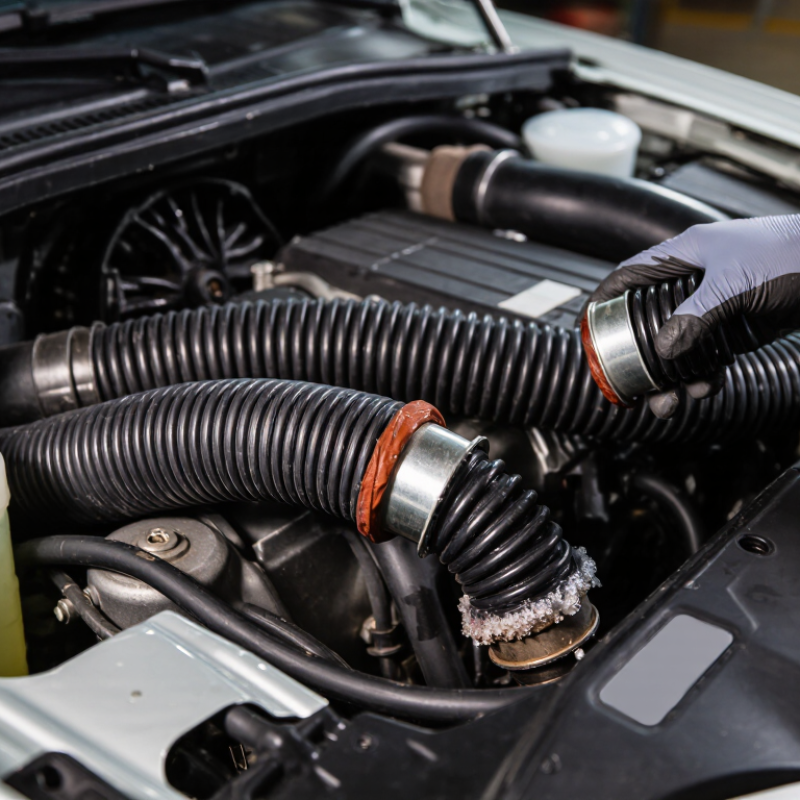
Why Do Radiator Hoses Fail and How Can You Prevent It?

Explain Hose Failure Modes: Heat, Pressure, Ozone, Abrasion, and Chemical Attack

Radiator hoses operate in a harsh environment. Engine heat can harden the outer rubber, while repeated heating and cooling create small cracks. Excessive pressure may swell the hose or expose weak areas near the clamps. A bulge is an early warning, not a cosmetic defect. A collapsed hose may indicate internal damage or restricted coolant flow.

Ozone attacks exposed rubber, especially in hot engine bays. Tiny surface cracks can spread across the hose ribs. Abrasion is another quiet threat. A hose rubbing against a fan shroud, bracket, or belt may wear through unexpectedly. Chemical attack can follow the wrong coolant, oil contamination, or spilled fuel. The rubber may soften, become sticky, or lose its shape. It looks fine at first.

Inspection should include squeezing the hose when the engine is cool. It should feel firm, not brittle or unusually soft. Check for stains, swelling, flattened sections, and clamp marks. Keep hoses away from sharp edges and moving parts. Use compatible coolant and rinse chemical spills quickly. Replace damaged clamps and support long hose sections properly. Do not rely on appearance alone; I have seen hoses fail where the surface looked acceptable. A pressure test can reveal weaknesses that hands miss. Small cracks deserve attention. Believing a hose is “good enough” is often the expensive mistake.

Assess Cooling-System Loads: 0.9–1.4 bar Pressure and 100–120°C Temperatures

Why Do Radiator Hoses Fail and How Can You Prevent It?

Radiator hoses work under more stress than their soft, rubbery surface suggests. In a healthy cooling system, pressure commonly reaches 0.9–1.4 bar above atmospheric pressure. Coolant temperatures may sit between 100–120°C during heavy traffic, climbing higher briefly under severe load. Each drive creates repeated heating, expansion, and cooling cycles. Over time, this movement hardens the hose, weakens its inner wall, and loosens its connection points.

Pressure tells an important story. A hose that feels rock-hard shortly after startup may indicate trapped pressure, combustion gases, or a restricted flow path. A soft hose can suggest internal collapse or material fatigue.

Check the system only when completely cool. Look for swollen sections, surface cracks, oily softness, and dried coolant marks near the clamps. A cooling-system pressure test can reveal slow leaks that visual checks miss. Replace damaged clamps and confirm the pressure cap matches the cooling system’s specification.

I have seen hoses replaced while the real fault remained a blocked radiator or failing thermostat. That mistake wastes time. It also invites another failure.

Use the correct hose shape, avoid sharp bends, and keep it away from exhaust heat. Recheck the hose after several heat cycles, because a new clamp may settle slightly.

The inspection routine is not perfect, but recording pressure and temperature readings makes vague symptoms easier to judge.

Apply SAE J20 and ASTM D380 Criteria to Hose Material Selection

Why Do Radiator Hoses Fail and How Can You Prevent It?

Radiator hoses rarely fail without clues. During inspections, I often find swollen ends, soft sections, or fine cracks near clamps. Heat, pressure, coolant chemistry, and engine movement slowly weaken the rubber. Choosing material by appearance alone is risky.

SAE J20 provides performance requirements for automotive coolant hoses, including resistance to heat, pressure, and coolant exposure. Use its hose classifications to match temperature and service conditions. ASTM D380 supports practical testing, such as burst pressure, dimensional stability, and adhesion. These tests help confirm whether a hose can tolerate real mechanical stress. EPDM is often suitable for coolant service, but the compound must match the coolant, temperature range, and pressure cycle. I have learned that a hose can pass one test and still fail in service. Installation quality matters more than many engineers expect.

Tips: Check hose hardness and surface cracks during every cooling-system inspection. Keep hoses away from sharp brackets and exhaust heat. Tighten clamps evenly, but do not crush the hose. Compare test results with SAE J20 requirements and relevant ASTM D380 procedures. Replace hoses showing swelling or permanent deformation. Small warning signs are easy to dismiss. That mistake becomes expensive when coolant reaches a hot engine.

Why Do Radiator Hoses Fail and How Can You Prevent It?

Material selection should match coolant temperature, pressure, chemical exposure, and aging conditions. The chart shows commonly published engineering temperature ranges for hose elastomers; these are indicative material ranges, not SAE J20 acceptance limits.

EPDM is widely used for water-glycol coolant hoses because of its resistance to heat, ozone, and glycol-based coolants. Silicone offers a wider temperature range but must still be checked for coolant compatibility, pressure capability, and reinforcement design. NBR is generally less suitable for long-term exposure to hot glycol coolant unless the formulation is specifically designed for that service.

Use SAE J20 to verify automotive coolant and heater hose performance requirements, and use applicable ASTM D380 test procedures for dimensional checks, hydrostatic pressure, burst behavior, and other rubber-hose evaluations. Prevent failures by controlling temperature, avoiding kinks and abrasion, using compatible clamps, and replacing hoses showing softening, swelling, cracks, or surface hardening.

Inspect for Cracks, Soft Spots, Swelling, Leaks, and Clamp Damage

Radiator hoses rarely fail without warning. During a cold-engine inspection, squeeze each hose gently. It should feel firm, not brittle, mushy, or unusually soft. Look closely for cracks around bends, flattened sections, swelling near fittings, and dried coolant trails. A white, pink, or green crust often marks a slow leak. Do not ignore a small damp spot.

Industry standards provide useful context. SAE J20 coolant-hose testing addresses heat, pressure, ozone, and coolant compatibility, but laboratory approval does not guarantee service life. Fleet-maintenance guidance commonly recommends checking hoses at every scheduled service, especially on vehicles exposed to heat, vibration, or long idle periods. The U.S. Department of Transportation’s commercial-vehicle inspection criteria also treats cooling-system leaks and damaged components as safety concerns. Evidence matters.

Clamps deserve equal attention. A loose clamp can leak; an overtightened clamp can cut the hose. Check for rust, distorted bands, sharp edges, and clamp movement. Replace damaged clamps with the correct size and position them behind the hose bead. Never tighten by instinct alone. That habit causes trouble.

Inspect after driving, too. A hose may look normal when cold but swell under pressure. Use gloves and keep hands away from moving parts. I have seen technicians focus on the rubber and miss a clamp slowly digging into it. That is an easy mistake, and it is worth reconsidering.

Why Do Radiator Hoses Fail and How Can You Prevent It? - Inspect for Cracks, Soft Spots, Swelling, Leaks, and Clamp Damage

Failure Sign or Condition Typical Cause What to Inspect Potential Effect on the Cooling System Urgency Recommended Preventive Action
Surface cracks or splits Heat aging, ozone exposure, repeated flexing, or contact with oil and chemicals. Check the outer cover, especially near bends, hose ends, and molded joints. Flex the hose gently only when the engine is completely cold. Small cracks can grow into a sudden rupture and cause rapid coolant loss or engine overheating. High Replace the hose if cracks are visible. Keep the hose away from hot exhaust components, sharp edges, and contaminated surfaces.
Soft, spongy, or mushy areas Internal rubber deterioration caused by age, excessive heat, coolant contamination, or oil exposure. Compare the hose with nearby sections. Look for a section that feels noticeably softer or weaker when the engine is cold. The weakened section may collapse under suction or burst under cooling-system pressure. High Replace the hose rather than trimming the damaged section. Correct any oil or chemical leak that could damage the replacement hose.
Swelling or ballooning Internal reinforcement failure, excessive system pressure, incompatible coolant, or long-term heat damage. Inspect for enlarged sections near the hose ends and compare the hose shape with its original molded profile. Swelling indicates reduced structural strength and may lead to a burst, coolant loss, or overheating. High Replace the hose promptly and investigate the cause of abnormal pressure, including a faulty pressure cap or other cooling-system fault.
Coolant seepage or visible leaks Hose deterioration, loose clamps, damaged sealing surfaces, abrasion, or a poor connection. Look for wetness, dried coolant residue, staining, or a sweet coolant odor around the hose and fittings. Never open a hot cooling system. Low coolant level can reduce heat transfer and may result in overheating or engine damage. High Repair the leak only after the engine is cool. Replace damaged hoses or clamps, refill with the correct coolant, and bleed air if required by the vehicle procedure.
Clamp damage or incorrect clamp position Over-tightening, corrosion, weak clamp tension, misalignment, or a clamp positioned beyond the hose sealing area. Check for cutting, deep clamp marks, rust, distortion, and movement at the connection. Confirm that the clamp is square and properly positioned. A damaged connection can leak even when the hose itself appears undamaged. Medium Use a suitable replacement clamp and tighten it according to the vehicle service guidance. Do not use a clamp that cuts into the hose.
Hose collapse or flattening Weak hose structure, blocked venting, excessive suction, incorrect hose routing, or a restricted cooling-system component. Inspect the upper and lower hoses while the engine is cold and compare their shape before and after normal operation, when safe to do so. Restricted coolant flow can increase engine temperature and reduce heater performance. High Replace a structurally weak hose and check hose routing, the pressure cap, thermostat, and other components for restrictions or faults.
Abrasion, rubbing, or chafing Contact with brackets, pulleys, fans, body panels, wiring, or other moving and vibrating parts. Inspect the full length of the hose for polished areas, thin spots, cuts, and exposed reinforcement. Continued rubbing can create a pinhole leak or sudden hose failure. Medium Correct the routing and install suitable supports or protective sleeves where appropriate. Replace any hose with exposed reinforcement.
Hard, brittle, or glazed surface Long-term exposure to heat, coolant, ozone, and engine-bay contaminants. Check whether the hose feels unusually rigid and inspect for a shiny, hardened surface or cracking around bends. A hardened hose loses flexibility and becomes more likely to crack at connection points. Medium Replace aged or brittle hoses during scheduled cooling-system service. Avoid using petroleum-based products on rubber hoses.
Repeated hose failure Unresolved overpressure, engine overheating, poor routing, incorrect coolant, faulty components, or installation problems. Review the cooling-system history and inspect the pressure cap, thermostat, radiator, water pump, hose routing, clamps, and coolant condition. Replacing the hose alone may not prevent another failure or may leave an underlying overheating problem unresolved. High Diagnose the root cause before installing another hose. Use the correct hose specification and follow proper filling and bleeding procedures.
No visible damage but advanced age Normal material aging can reduce strength internally before external symptoms appear. Check service records, production markings if available, hose flexibility, and the condition of nearby cooling-system hoses. An apparently sound hose can still fail unexpectedly after prolonged heat and pressure cycling. Low to Medium Inspect hoses at every routine service and replace them based on condition and vehicle maintenance guidance rather than appearance alone.
Safety note: Inspect and handle radiator hoses only when the engine and cooling system are cool. Pressurized coolant can cause serious burns. If the temperature warning appears or coolant is being lost rapidly, stop the engine safely and arrange professional diagnosis.

Prevent Failures Through Coolant Control, Correct Clamps, and Scheduled Replacement

Why Do Radiator Hoses Fail and How Can You Prevent It?

Radiator hoses usually fail through heat, pressure, chemical aging, or poor installation. In workshop inspections, I often find soft sections near the engine outlet. Other hoses feel hard and brittle, almost like plastic. Coolant contamination can accelerate this damage. The 2023 AAA roadside assistance report estimated that millions of American drivers needed emergency help, with overheating among recurring mechanical problems. A failed hose can quickly turn a minor service issue into an expensive roadside repair.

Coolant control is the first defense. Use the correct coolant type, maintain the proper mixture, and never ignore a rusty, oily, or unusually low reservoir. Industry service guidance commonly recommends checking coolant condition during scheduled maintenance, not only before long trips.

Clamps matter too. A loose clamp permits leaks, while excessive tightening can cut into rubber. Spring-style clamps should retain tension; worn screw clamps need careful replacement. Do not reuse a distorted clamp.

Tips: Check hoses when the engine is cold. Squeeze for cracks, swelling, or soft spots. Inspect around clamp edges. Replace hoses according to the vehicle service schedule, often before visible failure. Exact intervals vary with heat, mileage, and hose material. A scheduled replacement may seem premature. Sometimes it is. Yet waiting for a roadside leak is rarely cheaper. I have also trusted a hose that looked acceptable, and that judgment was wrong. Record coolant changes and hose inspections, because memory is an unreliable maintenance tool.

FAQS

What are the main causes of radiator hose failure?

Heat, pressure, ozone, abrasion, and chemical exposure slowly weaken the rubber. Repeated heating and cooling can create tiny cracks.

What does a swollen hose indicate?

Swelling often signals internal weakness or excessive pressure. It is an early warning, not a cosmetic problem. Replace it.

Why can a hose collapse?

A collapsed section may show internal damage or restricted coolant flow. Check the hose when the engine is completely cool.

How should a radiator hose feel during inspection?

It should feel firm and flexible. Brittle, sticky, unusually soft, or flattened sections need attention.

Where do cracks commonly appear?

Fine cracks often form near clamps, ribs, and exposed outer surfaces. Ozone can spread small cracks across the rubber.

How can abrasion damage a hose?

Contact with a bracket, fan shroud, belt, or sharp edge can wear through the wall. The damage may remain hidden at first.

Can the wrong fluid damage a radiator hose?

Yes. Incompatible coolant, oil, or spilled fuel can soften rubber and change its shape. Rinse chemical spills quickly.

What testing helps reveal hidden hose weakness?

A pressure test can expose weaknesses that hand inspection misses. Material testing should examine burst pressure, adhesion, and dimensional stability.

How should hose material be selected?

Choose material for coolant compatibility, temperature range, pressure cycles, and engine movement. A common coolant-grade rubber may still fail if poorly matched.

What installation mistakes shorten hose life?

Uneven clamp pressure, crushed hose walls, poor support, and contact with hot or moving parts create problems. Appearance alone is not enough.

Conclusion

Radiator Hoses operate under demanding conditions and can fail because of high heat, internal pressure, ozone exposure, abrasion, or chemical attack from degraded coolant. Cooling systems commonly experience pressures of approximately 0.9–1.4 bar and temperatures around 100–120°C, so hose materials must be selected for durability, flexibility, and resistance to these stresses. Applying SAE J20 and ASTM D380 criteria can help ensure that the hose construction and compound are suitable for the intended operating environment.

Regular inspection is essential for identifying cracks, soft spots, swelling, coolant leaks, and damage caused by loose or incorrectly fitted clamps. Preventive maintenance should include controlling coolant quality and concentration, replacing contaminated or aging coolant, using the correct clamp type and tightening method, and avoiding contact with sharp edges or hot components. Scheduled hose replacement, even before visible failure, further reduces the risk of overheating, sudden coolant loss, and costly system damage.

Madeline

Madeline

Madeline is a seasoned marketing professional with a deep expertise in the company's offerings. With a strong background in industry trends and consumer behavior, she expertly crafts insightful blog posts that not only highlight the features of the company's innovative products but also provide......