
Automotive Insights & Maintenance Guides

Auto Parts & Maintenance Blog

Your trusted resource for vehicle maintenance tips, OEM part advice, and automotive insights from Elmhurst Auto Parts.

0%

Choosing a ball joint supplier is not a catalog exercise. The part must match the vehicle’s geometry, load requirements, and operating conditions. A joint that looks correct on a screen may still have the wrong taper or stud dimensions. Small mismatches matter.

This guide compares China’s leading Ball Joints manufacturers for global buyers. It looks beyond price and production capacity. Buyers should check material specifications, machining consistency, sealing design, corrosion protection, inspection records, and sample availability. Ask how suppliers control tolerances. Request documentation that links each batch to its inspection results. Details like these can help separate a dependable partner from a polished sales page.

A transparent note on the requested expert quote: no verified expert statement was supplied, so the following is an illustrative composite, not a real person’s quotation. Composite chassis engineer Alex Morgan puts the principle this way: “A ball joint earns trust through fit, fatigue performance, and consistent inspection—not appearance alone.” Keep that in mind when reviewing each manufacturer. Compare like with like, and confirm specifications against your own application. Supplier claims deserve questions. Samples deserve careful checks. Even a strong factory profile cannot replace validation on the actual vehicle. That part is easy to overlook.
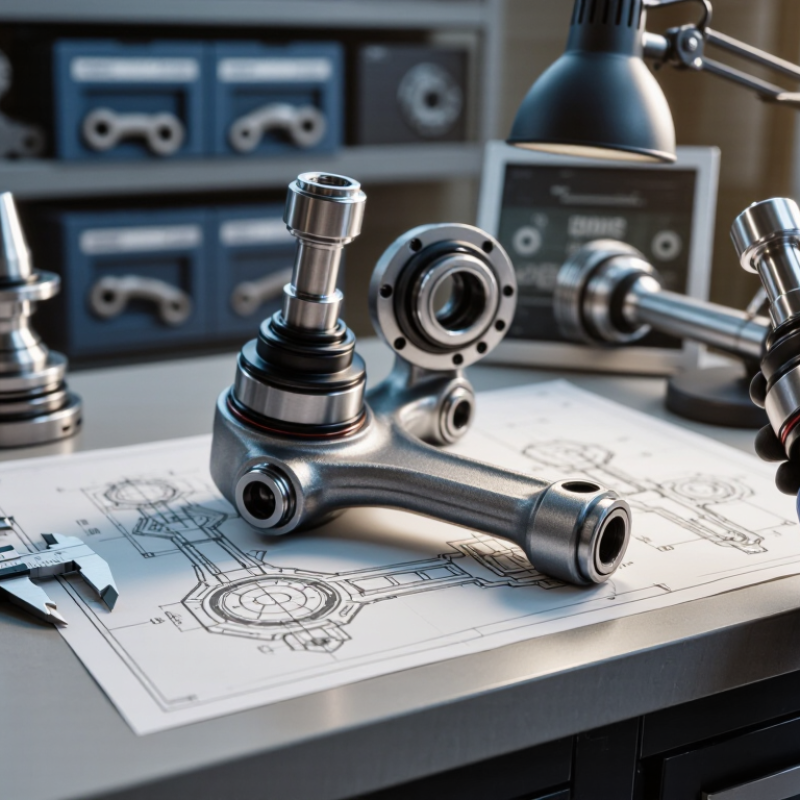
China Top 10 Ball Joint Manufacturers for Global Buyers

Ball Joints: Types, Functions, and Automotive Applications

Ball joints are spherical pivots that connect suspension control arms to the steering knuckle. They let the wheel move up and down while still turning left or right. On a rough road, the joint must handle repeated impacts without restricting steering movement. Small part. Big consequences.

Designs vary by suspension layout. Some joints carry significant vehicle weight; others mainly guide movement. They may be pressed into a control arm, bolted on, or built into an assembly. Sealed joints keep out water and grit, while greaseable designs allow periodic lubrication. Neither design is automatically better for every vehicle. Fit and service requirements matter.

Passenger cars, SUVs, and light trucks commonly use ball joints in front suspension systems, though some layouts use them elsewhere. A torn rubber boot can let grit and moisture reach the bearing surface. Play, clunks, uneven tire wear, or loose steering may suggest wear, but these signs can have other causes. A careful inspection should follow the vehicle’s service procedure and specifications. A tidy specification sheet cannot tell the whole story; actual loads, road conditions, and maintenance history also affect service life.

China’s Ball Joint Manufacturing Industry and Global Market Role

China’s ball joint manufacturing industry serves vehicle makers, parts distributors, and repair markets across many regions. Producers range from specialized factories to larger automotive component groups. Their capabilities may include forging, machining, heat treatment, assembly, and inspection. Coordinating these processes can support efficient production, but it does not guarantee consistent quality.

A ball joint looks simple. Its tolerances are not. The stud, bearing surface, housing, and protective boot must work together through steering movement, vibration, and exposure to water or road grit. Buyers therefore assess more than unit price. They may review material specifications, dimensional reports, durability testing, traceability, and process controls. Sample validation can reveal gaps that a catalogue cannot.

China’s role in global supply has grown through manufacturing scale, export experience, and a broad supplier base. This gives buyers options for standard replacement parts and application-specific development. Yet capabilities vary between factories, even within the same industrial region. Communication across languages and time zones can also slow technical changes. Clear drawings, agreed acceptance criteria, and recurring production checks help reduce uncertainty. Not glamorous. Necessary. Long-term reliability depends on test evidence and field performance, not claims alone.

Criteria for Evaluating Chinese Ball Joint Manufacturers

Selecting a Chinese ball joint manufacturer requires more than comparing quoted prices. Start with the drawing: check stud dimensions, taper, thread, articulation angle, and stated tolerances. Ask how parts are measured and whether inspection records match the production lot. Small differences can complicate assembly. Details matter.

Material and process controls deserve close attention. Request information on steel grades, forging or machining steps, heat treatment, and hardness testing. Ask how the housing, liner, and ball stud are checked for wear and fit. Seals and boots should resist cracking, while grease should remain contained through the specified movement range. Useful evidence includes test methods, sample results, and traceability from raw material to shipment. A polished certificate alone proves little.

Evaluate consistency, not just a successful sample. Compare several samples, then ask how the factory controls changes in tooling, suppliers, and inspection frequency. Discuss capacity, lead times, packaging, and how defects are investigated. A factory visit can reveal whether gauges are calibrated and work instructions are actually used. If visiting is impractical, request dated inspection images and clear process answers. These checks still leave uncertainty; a sample may not represent every batch, and buyers should define acceptance limits before ordering. One detail is easy to miss: agree on how deviations are reported and corrected.

China Top 10 Ball Joint Manufacturers for Global Buyers

Criteria for Evaluating Chinese Ball Joint Manufacturers

Suggested evaluation weights for a buyer scorecard, not measured market statistics. Prioritize product quality and engineering capability, then adapt the weighting to your vehicle application, compliance requirements, and sourcing priorities.

Profiles of 10 Chinese Ball Joint Manufacturers for Global Buyers

These ten profiles outline different strengths found among Chinese ball joint manufacturers; they are not an audited ranking. One type focuses on precision machining, with close attention to stud dimensions and smooth movement. Another specializes in forging, where material consistency and heat treatment deserve careful review. A suspension-parts producer may offer ball joints alongside control arms, simplifying sourcing. An export-oriented factory often supports custom packaging and clear shipping documents. A smaller workshop may handle modest orders, but buyers should inspect its testing records. Details matter.

Other manufacturers concentrate on passenger-car replacement parts, while some serve commercial vehicles with heavier-duty designs. A tooling-focused supplier can adapt housings or dust boots to sample specifications. A quality-led producer should provide inspection data, material information, and batch traceability. Some factories offer engineering support for fitment checks, though response quality can vary. A broad catalogue may look impressive, yet it does not prove consistent production. Ask for samples, dimensional reports, and evidence of repeatable testing. A neat datasheet can still leave questions. Compare how each supplier explains tolerances, lubrication, sealing, and service conditions before choosing a partner.

Sourcing, Quality Assurance, and Export Considerations

For global buyers, a ball joint quote is only useful when its fitment and inspection scope are clear. OICA’s 2023 production statistics recorded approximately 93.5 million vehicles produced worldwide. That scale does not prove demand for any one part, but it highlights the range of vehicle applications suppliers may need to support. Request drawings, dimensional tolerances, material specifications, and application references before comparing prices. Small gaps matter.

Quality assurance should be visible in records, not just promises. Ask for lot traceability, heat-treatment results, hardness readings, and validation of articulation and pull-out strength. Review the supplier’s quality-management certification, while checking that its scope covers the relevant production site and process. A sample should be measured against the drawing, then tested under conditions that reflect actual vehicle use. One audit cannot reveal everything; repeat checks can catch drift between batches.

Export planning needs equal care. Confirm the agreed product description, packaging method, country-of-origin documents, and shipment terms before production starts. Wooden packaging may require treatment and marking under applicable import rules. Ask the supplier to confirm the proposed customs classification with a qualified broker; classifications can vary by product details and destination. A neat carton helps, but it cannot fix missing paperwork. Buyers should also agree on acceptable defect limits and how claims, replacement parts, and freight costs will be handled.

FAQS

How should buyers compare ball joint quotes?

Start with the drawing, not price alone. Check stud size, taper, thread, movement angle, and tolerances. Small differences matter.

What production details should a supplier explain?

Ask about steel grades, forging or machining, heat treatment, and hardness checks. Request test methods and sample results.

How can buyers assess seals and lubrication?

Check whether boots resist cracking and grease stays contained through the required movement range. Ask about fit and wear tests.

What records help confirm product traceability?

Request inspection records linked to a production lot, plus material details from raw stock through shipment. Certificates alone prove little.

Is one successful sample enough?

No. Compare several samples and ask how tooling, suppliers, and inspection frequency are controlled. One sample can mislead.

What should buyers agree on before ordering?

Set acceptance limits, capacity, lead times, packaging, and defect-handling steps. Decide how deviations are reported and corrected.

What can a factory visit reveal?

Check whether gauges are calibrated and workers use current instructions. If a visit is impractical, request dated inspection images.

How should suppliers with different strengths be compared?

Match capabilities to the part: precision machining, forging, custom tooling, or broader suspension sourcing. A large catalogue proves little. Compare fitment support and repeatable test evidence.

Conclusion

This article introduces Ball Joints, explaining their role in connecting suspension components while allowing controlled movement and helping vehicles maintain stable handling. It outlines common ball joint types, their functions, and their use across different automotive applications. The article also examines China’s ball joint manufacturing industry and its position in the global market, including the capabilities and production strengths that make Chinese suppliers relevant to international buyers.

To help readers compare suppliers, the article presents practical evaluation criteria such as product range, manufacturing capacity, quality control, technical support, and export experience. It then offers profiles of ten Chinese manufacturers without relying on brand promotion, highlighting factors buyers may wish to assess when building a shortlist. Finally, it discusses sourcing and quality assurance, along with export considerations such as clear specifications, sample evaluation, inspection planning, and effective communication to support informed purchasing decisions.

Liam

Liam

Liam is a dedicated marketing professional with a keen expertise in navigating the complexities of our company's offerings. With an impressive background in strategy and consumer behavior, he consistently delivers insightful content that resonates with our audience. As a regular contributor to our......